Hayes Tree Preservation

Hayes Tree Preservation offers tree treatment services including Emerald Ash Borer protection for ash trees, treatments for Bur Oak blight and Oak Wilt disease in white oaks, and Dutch Elm Disease protection for American Elms. Hayes Tree Preservation can also help with trees suffering from chlorosis and other nutrient deficiencies, and can provide general tree evaluations and recommendations for management and preservation.

Aren’t all the Ash trees gone now?

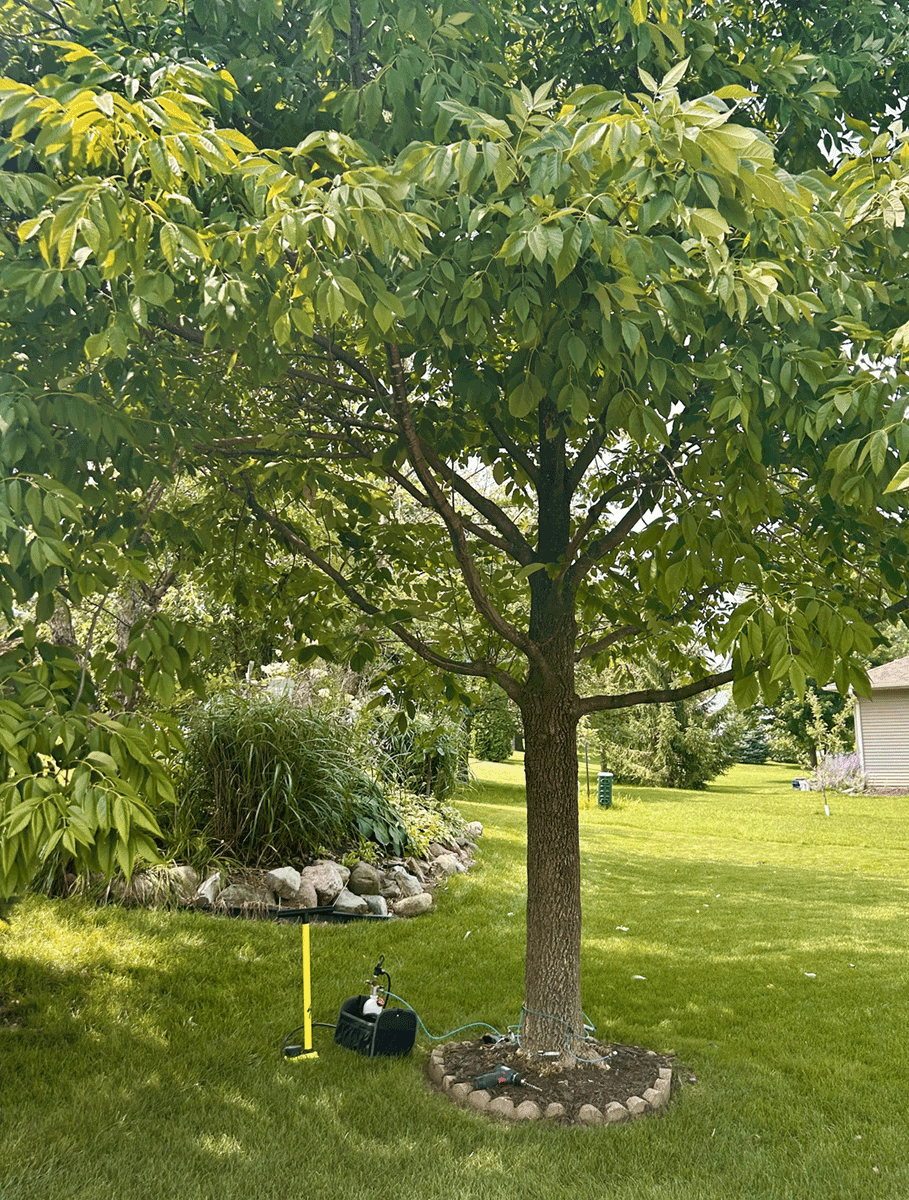
At this point in the Emerald Ash Borer infestation in Johnson and Linn counties, most of the ash trees that were not already treated to prevent infestation are indeed dead. There are two kinds of ash trees however – white and green. Green ash have no natural resistance to EAB and typically die within 2-3 years of infestation, while white ash have a small amount of natural resistance to EAB and typically die over 4-5 years of infestation. There are still some remaining white ash trees that are early enough in the infestation process to be treated and prevent further damage.
All protected ash trees will need to continue protection indefinitely if they are to stay alive. Though our local population of Emerald Ash Borers will crash after the majority of their food supply is dead, there will be a small number that continue the life cycle indefinitely as ash tree seedlings continue to germinate and grow along riverbanks and in unkempt areas, grow big enough to produce seed, and then are colonized and killed by Emerald Ash borer once they grow large enough. This food supply will keep the EAB alive in our area indefinitely. If you recently moved into a home with an ash tree that is still alive, that tree was mostly likely being treated by the previous homeowner and will need to continue treatment to survive. Contact Virginia if you have are in need of Emerald Ash Borer treatment.
What is Oak Wilt and how is it spread?
Oak Wilt is a fatal fungal disease that is spread through grafted root networks and by the Nitadulid Beetle. The nitadulid beetle is attracted to sap from fresh pruning cuts and can carry the fungus on its back and transmit it to the tree. This is why it is important to never prune an oak tree during the growing season. Only prune oaks in the winter in Iowa. Unfortunately, the beetle can also transmit the disease to trees that experience storm damage during the summer, and there is little we can do to prevent that. The fungus can also be spread from tree to tree through grafted roots, as many oak trees can have root networks that extend 2-3 times the spread of their canopy, or more. Oak wilt disease is currently present in Manville Heights in Iowa City, along north Dubuque street north of Iowa City, and near Bever Park in Cedar Rapids, and many other locations. There are two types of oak trees: red and white. Red oaks cannot be cured of oak wilt disease once they have it, but they can be treated preventatively to avoid becoming diseased. White oaks can be cured with successive treatments over a course of 6+ years if the disease is caught early.
How do I know if my oak tree is sick?
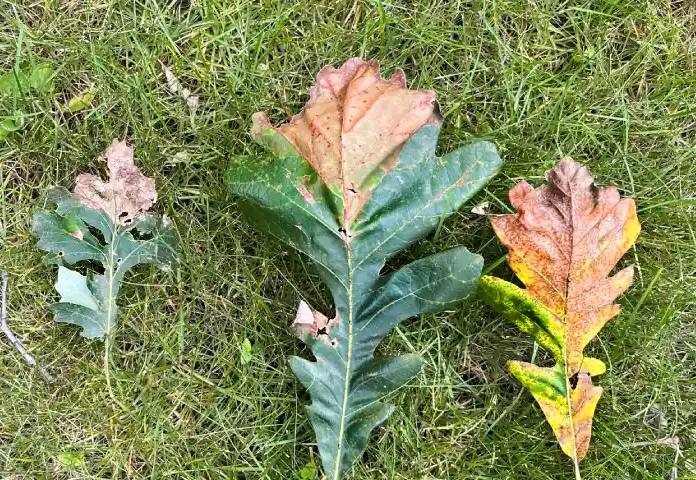
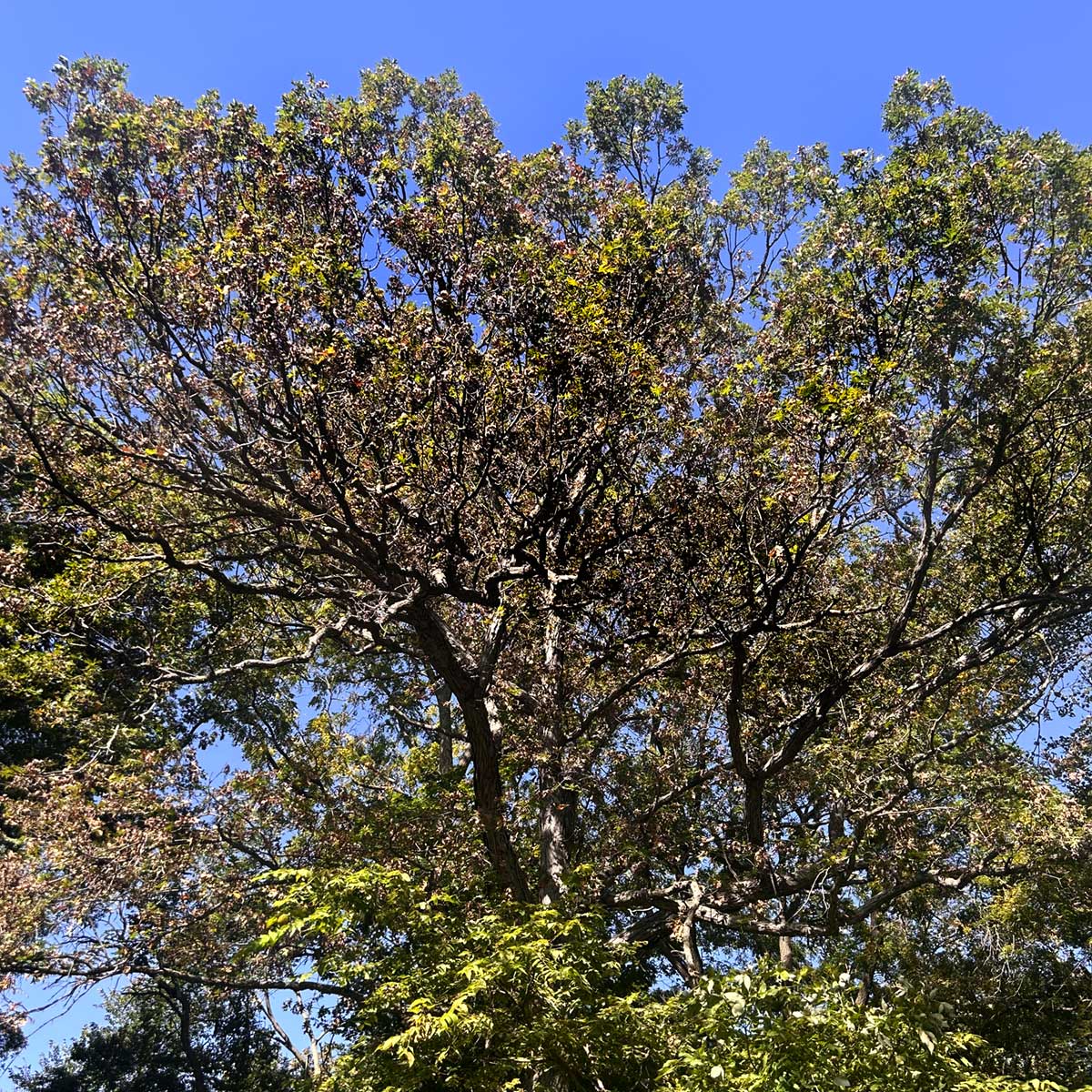
Look for discolored leaves during early summer. Contact Virginia right away if you see leaves changing color, turning brown, or dropping off the tree in early summer. Oak Wilt can only be definitively diagnosed by sending a sample to the Iowa State Diagnostic Lab.
What is Bur Oak Blight?
Bur Oak Blight is a slow-moving fungal disease of the white oak family. It causes discolored leaves, leaf drop, and stresses the tree, and can kill the tree if compounded with other stressors. Bur Oak Blight disease can be managed and in some cases cured.
Aren’t all the Elm trees gone now too?
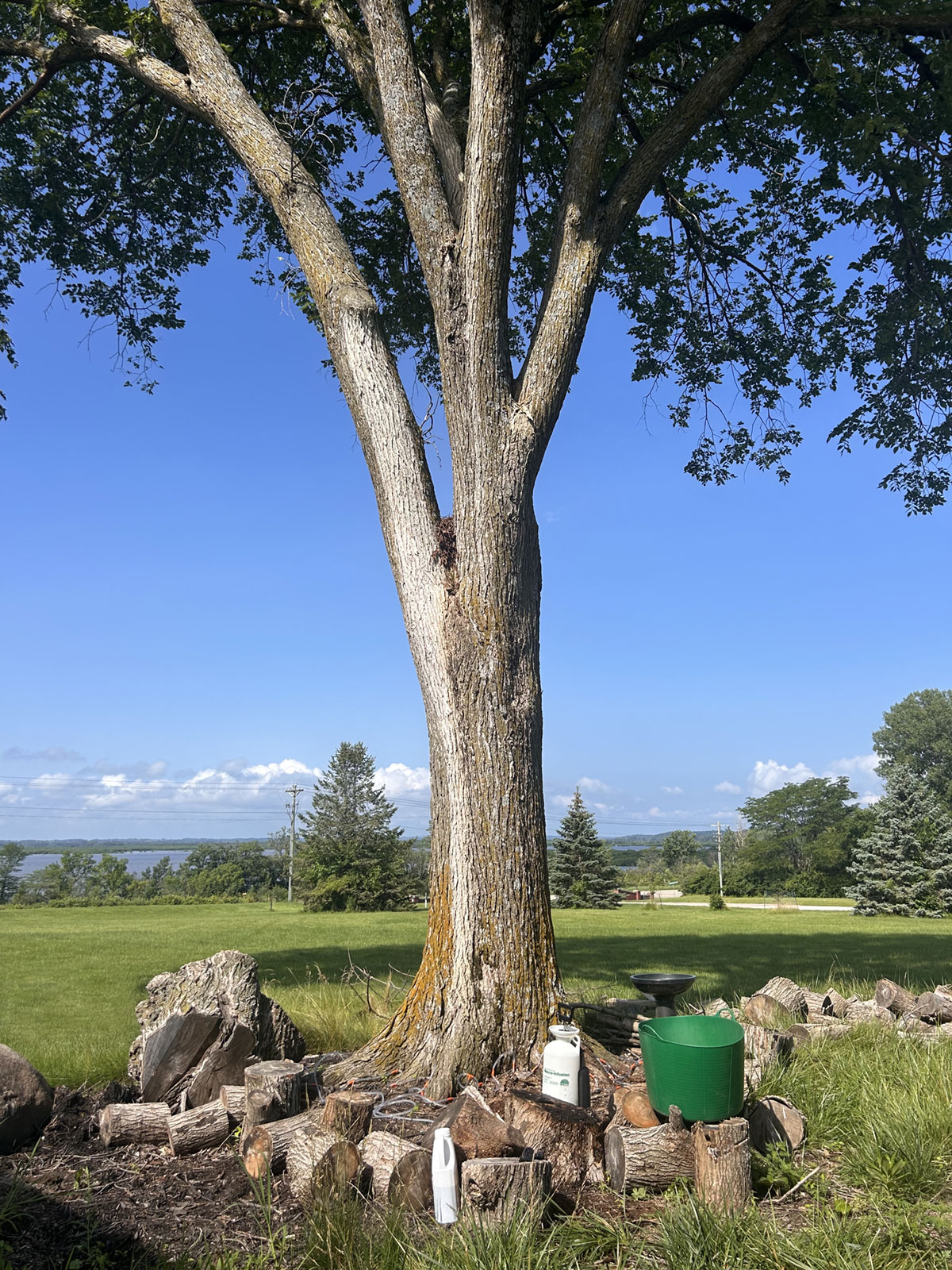
Mostly, yes, but not all of them. Since 1956 when it was first detected in Iowa, Dutch Elm Disease killed off at least 95% of Iowa’s American Elms. Elms have continued to germinate from seed in natural areas however and sometimes get to be quite large. Dutch Elm disease spreads similarly as Oak Wilt, by grafted roots and by the elm bark beetle. Some spectacular elm trees remain alive in Johnson and Linn counties and preventative fungicide treatment can help keep them alive for decades to come.
ABOUT VIRGINIA
Virginia Hayes is an ISA Board Certified Master arborist with over 12 years of experience planting, pruning, and preserving trees in the Iowa City area. Virginia is a licensed pesticide applicator and is also Tree Risk Assessment Qualified. Virginia is skilled at structural pruning in small trees to help guide them towards a mature structure that is less prone to storm damage.